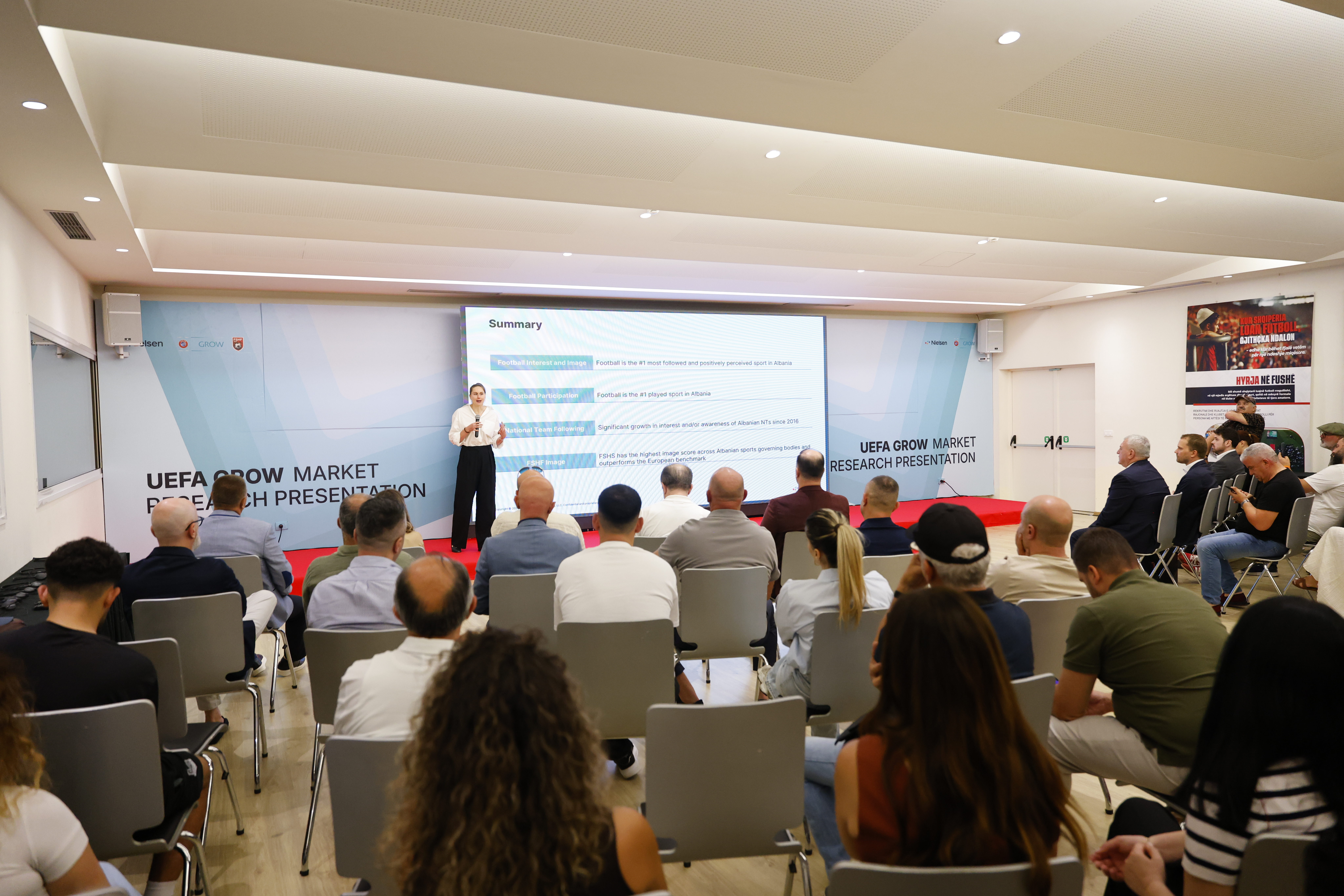
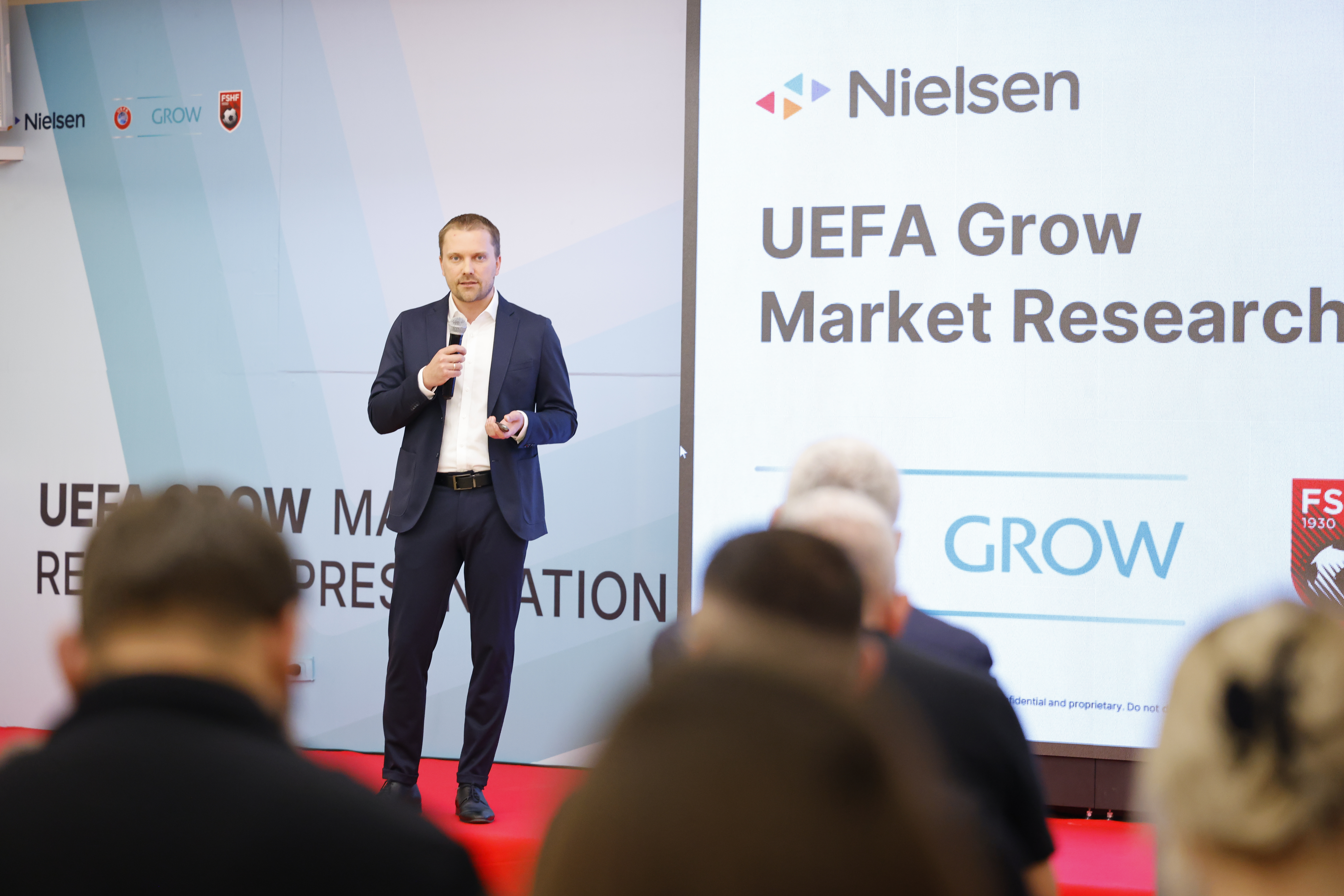
The “House of Football” hosted the presentation of the “UEFA Grow Market Research” report today, an analysis conducted by UEFA in collaboration with the prestigious sports research agency Nielsen Sports, providing key insights into the perception, development, and impact of football in Albania.
The event was attended by Armand Duka, UEFA representatives, institutional partners, and members of the media.
The report highlights that Albania ranks first in Europe for interest in football, with 78% of adults declaring they are interested in the sport—significantly higher than the European average of 48% and a notable increase compared to 2016, when the figure stood at 65%.
In his opening remarks, Armand Duka thanked UEFA and Nielsen Sports for the study, emphasizing that such research has played an important role in guiding the Albanian Football Association’s development strategy.
He stated that UEFA’s continued support—through projects, initiatives, and studies—helps the federation better shape its development strategy and define priorities for achieving its objectives, making football more attractive, more engaging, and a leading sport in the country.
The findings of the “UEFA Grow Market Research” report were presented at the “House of Football”, showing impressive results for Albanian football, including the fact that Albania ranks first in Europe for interest in football, with 78% of people expressing interest in the sport.
President of the Albanian Football Association Armand Duka described the results as both positive and demanding, noting that they place greater responsibility on the federation to meet public expectations and continue developing the game.
He highlighted that football is the most widely played sport in Albania, with 34% of adults and 41% of children participating, adding that this growth has been supported by FSHF projects such as “Uniforma Ime” and “Topi Im”, as well as continuous improvements in sports infrastructure.
Duka also emphasized that all findings from the study will serve as a “clearer compass” for the federation’s future strategy, underlining the commitment to further improving its work. He noted that the federation’s public image has improved compared to 2016, reaching 52% positive perception.
According to the report, football remains the most positively rated sport in the country, with an average score of 7.5 out of 10, ahead of volleyball and athletics. Interest in the Albania national team has also increased, rising from 61% in 2016 to 66% today.
The study further shows growing awareness of youth national teams and the women’s national team, reflecting the impact of investments across all levels of Albanian football.
Public perception of the Albanian Football Association remains strong, with 47% of respondents expressing a very positive opinion and an overall institutional image score of 7 out of 10—above the European average and higher than other sports federations in the country.
The report concludes that continued progress, national team results, infrastructure development, and institutional transformation are the key drivers behind the positive perception of football in Albania. The findings will serve as an important tool for shaping future priorities and strengthening football’s position as the most popular sport in the country.