From Sokol Jareci*
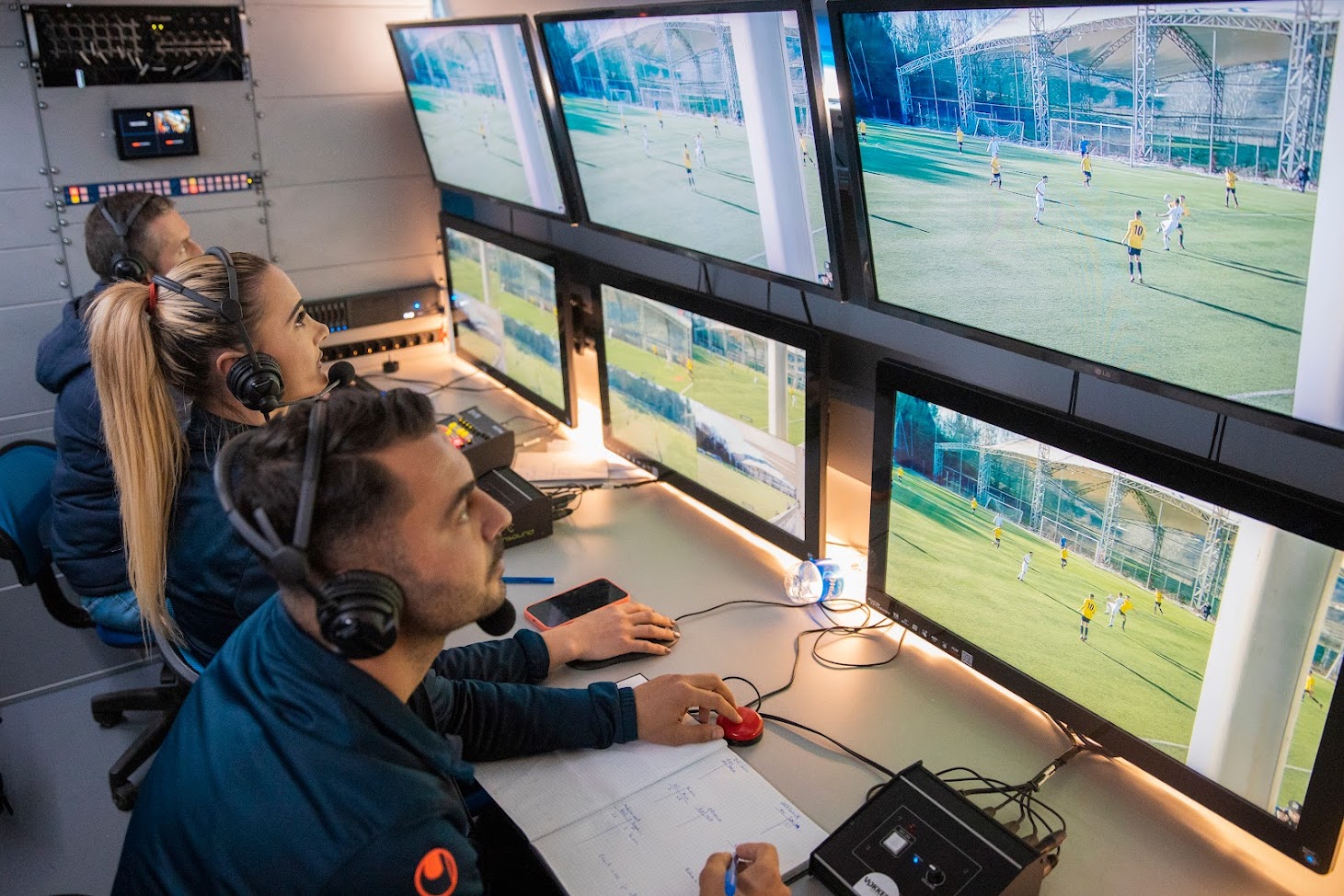
Based on an article in the written media regarding the criticisms of the VAR system’s operation, i would like to provide some information on how this system works in the Abissnet Superiore matches, the First Division, and the Abissnet Superiore Women’s League.
The VAR system, implemented in the Albanian championship since the 2021-2022 season, is a system provided by the company EVS, which is also part of the VAR system in UEFA competitions like the UEFA Europa League (UEL) and UEFA Europa Conference League (UECL).
In our activities, the system operates with 7 cameras in all matches where the VAR system is present: three central cameras (two in the stands and one below), two cameras behind the goals, and two cameras in the 16-meter area. These cameras provide the visual data for the VAR system. In every situation that is reviewed, depending on what is described in the VAR protocol, the designated VAR referee has access to 7 sources of footage, not all of which are useful for every situation.
For cases in the penalty area, most decisions are made using the footage from the cameras behind the goal, which are exclusive for these types of situations.
For offside decisions, the majority of decisions are made from the footage provided by the cameras located along the 16-meter lines. As part of the procedure for offside cases, the first step is identifying the player who is closest to the goal line (either the attacker or the defender). The second step is placing points on the parts of the player’s body that are closest to the goal line (excluding the hand). Once this process of placing the points is completed, the system itself generates the diagram (lines) for both the attacking and defending players.
The difficulty increases when it comes to identifying whether an attacking player is in an offside position when several players are inside the goalkeeper’s area. This makes identification challenging because the distances between the players are very close, which complicates the placement of points, or the footage does not include all the players involved in a situation.
Even in these situations, the referees in the VAR role do their best to make the correct decision based on the available footage, which at times may cause delays in the decision-making process. In these situations, it is essential to use footage from other cameras, which, at certain moments, are very helpful in making accurate decisions.
Claims that the lines are not straight are completely incorrect and, in many cases, are attempts to stir up controversy and create debates out of nothing. These are simply optical illusions where the view closer to the area appears wider, and the view farther away appears narrower. The VAR system’s reference for identifying an offside position starts from the goal line, where the footage from this line to the player in the offside position is very precise (parallel), and this can easily be verified with the footage provided for such cases.
The system with 7 cameras is one that provides abundant information for making accurate decisions through the VAR system. It is a good and high-quality system that is continuously updated by the company EVS. The implementation of this system with 7 cameras has significantly reduced errors on the field, especially those that occur in the penalty area or goals scored from offside positions.
The infrastructure of our stadiums, in most cases, is quite good, as they are stadiums where UEFA and FIFA matches are held.
In Europe today, there are federations that use the VAR system with 4 or 5 cameras for their competitions, as this is the number of cameras permitted by FIFA’s regulations. This places us among the federations with a highly productive and efficient VAR system for making decisions.”
*Head of the Refereeing Department at the Albanian Football Association (AFA)